


Bellandur Lake, located in East Bengaluru, is one of the oldest and largest lakes in Bengaluru. Covering an area of 960 acres, the lake is one of the biggest water bodies in the Bengaluru Urban district.
There are several agencies that have a role to play when it comes to the upkeep of the Bellandur lake:
- Bruhat Bengaluru Mahanagara Palike (BBMP)
- Bengaluru Water Supply and Sewerage Board (BWSSB)
- Pollution Control Board
- Fisheries Department
- Minor Irrigations Department
- Lake Development Authority (LDA)
Till a few decades ago, Bellandur lake acted as a lifeline for the surrounding villages. The water in the lake was used for irrigation, fishing, and drinking. It was home to the annual ‘Theppotsava’ (boat festival) celebrated by nearby villagers.
Bengaluru’s biggest and most polluted lake
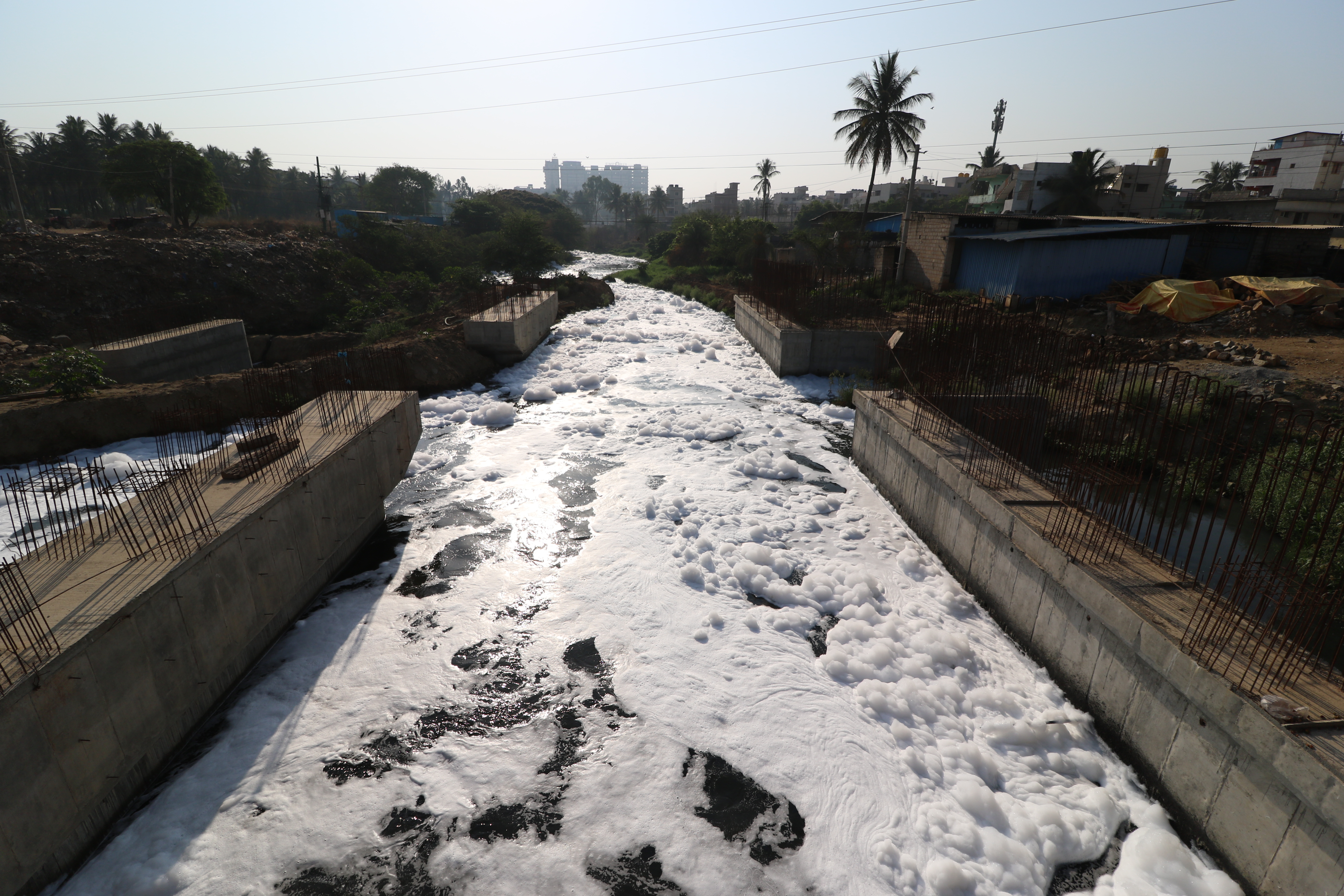 Bellandur lake is currently one of the most polluted lakes in Bengaluru. There are two main causes for such high levels of pollution:
- Untreated sewage water entering through various inlets
- Untreated industrial wastes emerging from small factories
Existing sewage treatment plants (STPs) are ineffective and limited in capacity. This has led to pollution from both domestic sewage as well as industrial effluents. Several of these issues have been affecting Bellandur Lake even as back as the late 1980s. However, increased urbanisation and persistent dumping of untreated sewage have worsened the situation.
Actions taken by civic bodies are not proving to be effective. The High Court had issued several directives to the BWSSB, but they were never followed. The lake is facing a huge issue with silt and 30 per cent of the lake has hyacinth weed cover. Yet, there was no conscious effort towards desilting, de-weeding, or cleaning the lake.
Protests to save the lake
Over the years, various entities took up this issue. Citizens, farmers, and environmentalists have tried to elicit proactive action from the government.
In 1997, BDA wanted to acquire the land around the lake for the Outer Ring Road linking ITPL and Electronic City. The farmers around the area formed Raitha Horata Samithi. This association protested against the acquisition. They found partial success in getting the BDA to alter the route plan.
That year, panchayat president Jagannath Reddy and environmental activist Ramamurthy initiated court proceedings. They urged BWSSB to clean up the lake and prevent untreated sewage flow. As a result, there was an upgrade in the sewage treatment plant at the inflow of the lake.
During National Games in 1997, the lake was pronounced unfit for water sports because of silt. After this event, the media took up an interest in the lake.
Resident welfare groups in Koramangala have been active in the issue since 2000. They have been lobbying government bodies to prevent sewage mixing with the stormwater drain and flowing into the lake.
In the recent past, Bellandur lake grabbed international headlines. It witnessed the infamous incidents of fire in different sections of the lake. This was on account of chemicals present in the untreated sewage flowing into the lake.
Bringing Bellandur lake back to life
In 2015, I involved myself in the lake conservation movement.
On account of the inaction by the authorities, I filed a PIL before the Karnataka High Court. This secured an order for the appointment of two special officers. They were to look into the status of the lake and take all remedial measures to restore and rejuvenate the lake. The results were
- Aan expert committee
- A rejuvenation plan comprising of short-term and long-term action plans.
 Despite all this, the progress was still sluggish.
In 2017, I filed a comprehensive case before the National Green Tribunal (NGT). Raised various issues including environmental degradation and injury to ecology and the environment. It secured an order that has had a far-reaching outcome in controlling the pollution and degradation of lakes.
The NGT provided significant recommendations/directives to curb further damage to the lake. In continuation of the efforts, I filed applications to expand the scope of restoration of Agara and Varthur lakes. An order to that effect was also obtained on May 18, 2017.
Small victories, but a long way to go
As a result of the efforts:
- CCTV cameras got installed to monitor pollution activities near Bellandur Lake.
- Sewage treatment plants were put in place to contain pollution of the lakes.
- Agra lake was completely de-watered and restored.
- On 5th January 2018, an NGT order held the state authorities responsible for the lake. The tribunal also ordered the state to devise a comprehensive action plan.
- On 29th January 2018, the tribunal ordered a compliance report. NGT instructed the removal of macrophytes and hyacinth from lakes at regular intervals.
- We next addressed the problem of municipal solid waste in the catchment areas of the three lakes. The state and its authorities were directed to submit an action plan on the same.
Experts have recommended certain steps for the restoration of the lake. Prof T V Ramachandra of IISc has offered some possible solutions. The steps recommended in his report “Pathetic status of wetlands in Bengaluru” are:
- Appointment of a single agency to be the custodian of natural resources. The agency should have statutory and financial autonomy. It should be responsible for regular maintenance and action against polluters.
- Removal of encroachment based on reliable cadastral maps.
- Regular removal of macrophytes in lakes.
 Some suggestions
The authorities could explore technology for the conservation of lakes. Technical innovations like nanotechnology, bioremediation, and floating treatment wetlands can be helpful.
It is important to involve the community in conservation activities. Initiatives such as community lake festivals can drive community participation. This would help create a much-needed high momentum for the lake conservation movement.
Leave a Reply