


In August 2019, the prime minister of India had asked the citizens to free the country from single-use plastic. He had also hinted that a nation-wide ban on single-use plastic would be implemented on Mahatma Gandhi’s 150th birth anniversary. However, on 2nd October, the PM reiterated this plan and announced that India will phase out single-use plastic by 2022.
The revision on plastic ban happened due to the backlash from several industries. Major industry bodies like Federation of Indian Chambers of Commerce and Industry (FICCI) also opposed this move. Food industry is heavily dependent on single-use plastic for packaging products like chocolates, biscuits, snacks, milk, and beverages. Other products like shampoo sachets, oils, toothpaste, soaps, detergent, and chewing tobacco also use plastic. There are no effective and immediate alternatives to plastic packaging. Finding an alternative packaging material and repacking the products will also lead to increased pricing. However, researchers across the world are coming up with materials made from seaweed, mushroom roots, bagasse, milk, etc as plastic alternatives.
Some of us still have a myriad of questions… What exactly is this single-use plastic? How is it different from other plastic? When was it introduced? What all things I use have single-use plastic? Why is it so popular? Why is it getting banned? What alternatives do we have?
Keep reading to get these questions answered.
The history of single-use plastic
Single-use plastic, also known as disposable plastic, is the kind of plastic product intended for use only once before disposing. This includes the materials we use daily like plastic carry bags, straws, spoons, forks, stirrers, cups, shampoo/pickle sachets, chocolate wrappers, cup lids, snack covers, beverage bottles, cigarette butts, styrofoam, and bubble wrap.
Polyethelene or polythene is the synthetic material primarily used to create these materials. It was an accidental discovery in 1899. The first industrially practical polythene, yet again serendipity, was discovered in 1933. In 1965, a Swedish company named Celloplast took patent for polythene shopping bags. This was a major trigger for the spread of plastic like a wildfire. By 2011, one million plastic bags were used every minute around the world.
There are other types of single-use plastic as well, like cellulose acetate that is used to make cigarette filters.
Behind the popularity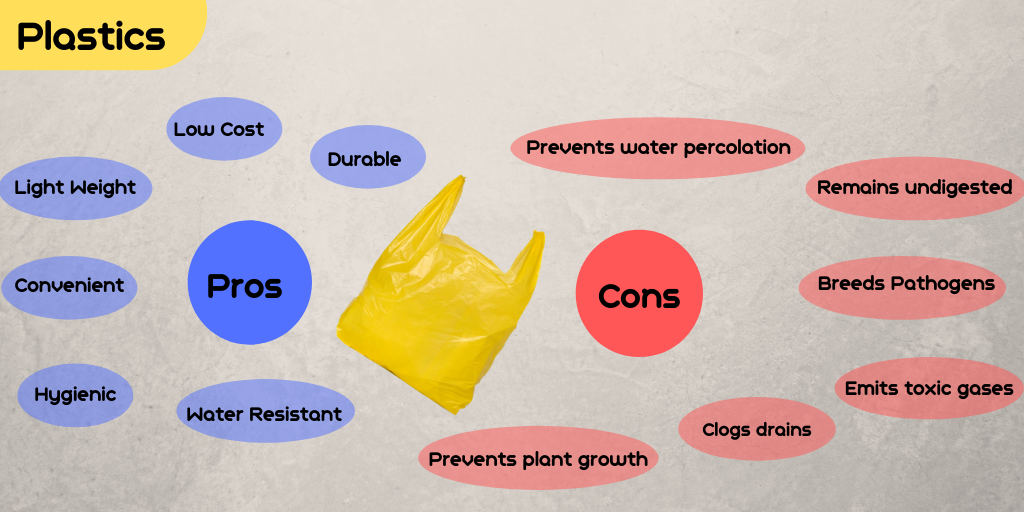
There are multiple properties that made plastic easily blend into our lives. Each industry adopted single-use plastic for specific reasons. Plastic bags were low-cost, durable, light-weight, water-resistant, and convenient. They also prevented the cutting down of trees for making paper bags. Plastic cutlery and plates were introduced to improve hygiene and reduce manual labour and cost. Food is preserved longer if wrapped in plastic. Single-use plastic is commonly used in the medical industry to keep the equipment sterile and control the spread of infection.
Impact on the environment
Studies show that it takes four times less energy to manufacture plastic bags as compared to paper bags. It uses relatively low resources and reduces emissions across the various life cycles of a product. It can also be recycled and reused. However, a major part of the plastic waste doesn’t reach the recycling plant. They are either disposed carelessly in the environment or mixed with wet waste and sent to landfills. This is one of the reasons why plastic has become a curse.
Single-use plastic is disastrous to the environment in multiple ways. Many of the single-use plastic items discarded in drains and rivers eventually end up in the ocean. This debris floats with the ocean current and stays in the ocean as large patches of floating garbage. The Great Pacific garbage patch and the North Atlantic garbage patch that covers millions of square kilometres are examples of these. It’s not just on the surface, deep-sea divers have found carry bags and candy wrappers in the deepest part of the oceans – both of which are single-use plastic. These plastic materials are a threat to aquatic life. They often mistake plastic for food, only to get it stuck in their throat or stomach. Sometimes it gets stuck to the nostrils, making it difficult to breathe. The toxic substances in plastic can also cause reproductive failure in these organisms.
Now, let’s see what plastic does to the land. Since it is non-biodegradable, plastic trapped in soil stays there for a long time. It stops the plants from penetrating their roots into the soil, and thereby prevent plant growth. The disposable plastic dumped on roadside and abandoned plots collects water and becomes a breeding ground for mosquitoes and disease-causing microbes. Animals like cows and dogs eat the debris and these remain undigested in their bodies. Recently, doctors in Chennai surgically removed 52kg plastic from a cow’s stomach.
Plastic is impermeable to water. It prevents rainwater from percolating into the soil. It clogs the drains, thereby increasing the chances of flood. If you burn the plastic instead, it emits toxic gases that are harmful to health.
Although plastic is cheap, plastic recycling is a costly process. We don’t have enough recycling units to match the amount of plastic waste generated every day. Another issue is that not all plastic products can be recycled.
Need to control this issue
Plastic production may be less harmful to the environment as compared to paper, glass, or metal. But in effect, plastic is posing the most threat to our ecosystem. This is primarily due to the lack of proper disposal mechanism for plastic waste.
There are many policies on the state, national, and international level to control plastic pollution. Despite this, plastic continues to threaten the existence of living beings and natural resources. The policies, rules, and regulations will be effective only if we build awareness at the grassroots level.
Half of all the plastic that existed was made after 2003. A large amount of plastic waste generated every day consists of single-use items. About 79% of waste goes to landfills. 12% gets incinerated. Only 9% gets recycled.
At this rate, the future of the world depends on how we manage plastic waste. The responsibility lies with each of us.
Are you ready to do your part to save the earth from the clutches of single-use plastic?? Click here to know how you can contribute.


Leave a Reply