


In 2017, 44% of people who died due to road accidents in Bengaluru were pedestrians. In 60% of the cases, the victims were crossing the road at the time that the crash occurred. 19% of the victims were walking on the side of the road or the footpath when they got struck by a vehicle.
These statistics bring to notice the pathetic state of pedestrian safety in our city.
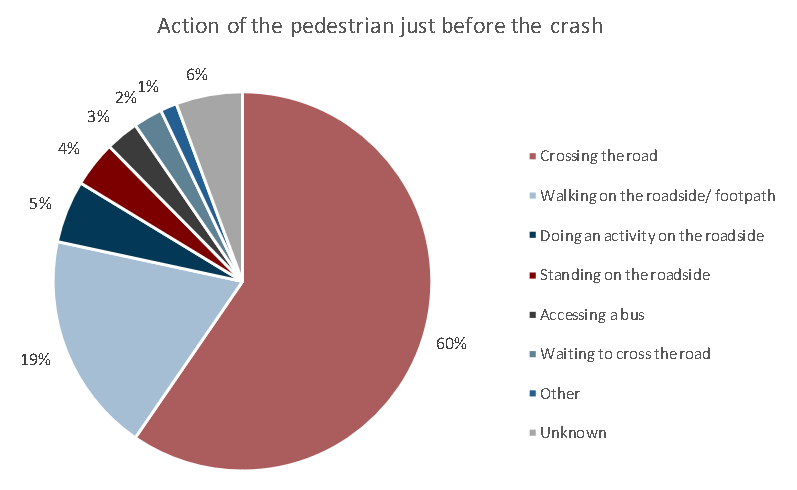
Source: The Footpath Initiative
Pedestrians are integral to the city
Most of us are pedestrians at some point. We take a stroll around the neighbourhood or walk to the metro station/bus stand or even walk from the parking lot to our destination.
Pedestrians also include people for whom walking is a preferred mode of transportation. They play an important role in ensuring the smooth functioning of the city. They add to the unique character of the city. Walking not only leads to a healthier population but also helps keep pollution levels down.
Already, air pollution has emerged as a leading cause of death in urban India. About 1.24 million deaths in India in 2017 were due to air pollution. Also, more than half of the victims were less than 70 years of age.
We know that automobiles are responsible for a big chunk of pollution in the cities. A study by the CSTEP expects that nitrogen oxide, carbon monoxide, and organic compound concentrations in Bengaluru’s air will more than double by 2030. Particulate matter concentrations will see a 70% increase.
Encouraging pedestrians and those who use public transport is an important part of keeping pollution in check.
However, poor facilities and lack of infrastructure are dwindling the number of pedestrians. People prefer to drive or hail a cab even for short distances. As of October 2018, Bangalore was home to over 76.2 lakh vehicles. Karnataka has seen a 100% rise in vehicle numbers in seven years. Bangalore has contributed a large chunk of this.
Increasing the number of pedestrians
To encourage more people to walk or use public transport, it is important to make it convenient for them to do so. For this, we need to ensure adequate footpaths that are wide and well-maintained. There should be strict regulations to ensure that footpaths are not encroached by hawkers or used as a parking space.
Also, we need to make provisions so that people can cross the roads in a safe manner without having to fear for their lives. Well-designed zebra crossings, subways, traffic regulations for pedestrians, and foot overbridges located at appropriate points are crucial.
By making it more convenient and attractive for citizens to walk, we can help improve the quality of life in Bengaluru.


Leave a Reply